
 Raising Hare: A Memoir by Chloe Dalton
Finally, something good to come out of the pandemic! When the world went to lockdown in 2020, Chloe Dalton retreated from her high octane political advisor job to her home in the English countryside. At first, she chafed under the isolation, but when she finds an orphaned leveret (baby hare), she rises to the challenge of keeping this most delicate of babies alive. Not only does 'Hare' live, but she thrives. Because Dalton resists the urge to make a pet of her, the hare remains wild and leaves at maturation -only to come back of her own accord repeatedly over the ensuing years. Hares are an elusive, undomesticated species (nothing like rabbits, despite the similarities in appearance) whose continued existence is thanks to its being the 6th fastest land mammal. Beautiful recounting of how living each moment, embracing home, and connecting with nature are all keys to a happier, healthier life.
 Good Energy: The Surprising Connection Between Metabolism and Limitless Health by Casey Means
When Dr. Means talks about the science of nuitrition and exercise, and how that leads to better health, better metabolism, and consequently, a better life, this book is a 5 star book. And, to be fair, most of the book is 5 stars. There is such a clear correlation between what we eat and what we do and the impact of those choices on quality of life. Dr. Means also talks at length about our health care system (sick care system?) and how modern medical interventions for chronic illness (the preponderance of health complaints are of a chronic nature) are subpar, at best. The good news is that diet and nuitrition, coupled with an active lifestyle, can elevate much of those diseases -type 2 diabetes, depression, metabolic disorder, dementia (type 3 diabetes), autoimmune issues, etc.
Where she kind of lost me is when she referred to these healthy practices as 'Good Energy', as if she were proselytizing for a new religion. Particularly towards the end of the book, the science got light and the new age recommendations got very, very heavy. Nevertheless, well worth the read if you're hoping to improve your health, life expectancy, and quality of life!

Eight Bears: Mythic Past and Imperiled Future by Gloria Dickie
I had high expectations for this book, but the science was very weak. Some interesting anecdotes about bears (Paddington is a spectaculed bear!), and some fun facts (for example, there are 35 kinds of canines and 41 felines, compared to 8 species of bear). However, I could have found those things out through random googling. The author vacillated between scolding humanity for not doing more to protect bears and wanting to enchant us with how gosh darn lovable bears are. I found Fuzz: When Nature Breaks the Law to be much more edifying and engaging.

Fuzz: When Nature Breaks the Law by Mary Roach
Not quite as captivating as Gulp, but Mary Roach's writing (including footnotes!) continues to be funny and enlightening. Between bears, birds, deer, and big cats (not to mention rodents of all kinds!), it's interesting to hear about how humans have tried to reconcile our lives with animals who don't want to follow our rules. Especially when we read about how often Nature Finds a Way. Adjacent to that: don't think you're ever going to eradicate a species that has a foothold somewhere, it's just not possible.
 Elon Musk by Walter Isaacson
Phew, 600 pages is a lot to take in about one person. But when that one person is Elon Musk, the verbiage is justified. Truly, Musk is the innovative genius of our time -and he's not done yet. Additionally, his personal life and proclivities add details that are enthralling (although I'm not sure they're particularly enlightening). Abrasive, abrupt, domineering, exacting, and inexhaustible, he leaves a trail of bodies in his wake. Is Musk a nice guy? No. Is he a not-nice guy? Sometimes, but that doesn't equate to him being the villain that he is often made out to be.
However, only by reading in depth his list of (ever growing) accomplishments can one truly appreciate the impact Musk has had on the world. And, again -he's not done yet.
Walter Isaacson, a prestigious academic and former CEO of CNN, seems to feel equal parts disdain and grudging admiration for Musk. Should we be able to detect the author's personal feelings for the subject while reading a biography? I guess objectivity, like travel to Mars, remains elusive in 2024.
 Impossible Escape: A True Story of Survival and Heroism in Nazi Europe by Steve Sheinkin
This nonfiction Holocaust survival story follows two courageous Slovakian teens through heinous tribulations during WWII. Rudy is a young Jewish man who attempts to slip through the Slovakia border into Hungary in 1942, in the hopes of making his way to the West and joining the British military to fight Nazis. Unfortunately, he has several setbacks before eventually ending up in Auschwitz. But in a stunning display of wiliness and guts, he formulates a plan to escape from the veritably inescapable camp. His mission isn't personal freedom, but a quest to share the full knowledge of the campaign to exterminate the Jews with the Allied forces. Astonishingly, the Vrba-Wetzler Report, one of the earliest descriptions of the gas chambers and concentration camps, comes from the testimony of Rudy and a fellow prisoner-two men barely out of their childhood.
Gerta is a schoolmate of Rudy's, and while she doesn't end up imprisoned, it's an amazing combination of luck, stealth, and wits that allows her to maintain her freedom, and also join up with the resistance.
Fans of Prisoner B-3087 and Alan Gratz's other historical fiction will find this book engrossing, with the added punch that Rudy and Gerta's story is all true. For more information on what they accomplished, see: The Vrba-Wetzler Report (Auschwitz Protocols).
 Natural Born Heroes: How a Daring Band of Misfits Mastered the Lost Secrets of Strength and Endurance by Christopher McDougall
Although this was in many ways an astounding story, I could only give it 3/5 stars as it meandered here and there, interspered with anecdotes about distance runners, dieticians, fitness gurus, Teddy Roosevelt, Natural Movement, etc. Mr. McDougall had the right idea, linking the fabulously fit and resilient Cretan freedom fighters with our modern efforts to attain peak conditioning, but -wow. Fragmented and hard to get back into the initial story of British intelligence officers and Cretan freedom fighters kidnapping a Nazi general and crippling the German pivot point needed to reinforce the war effort in the Soviet Union.
I was gratified by the nuggets of information I picked up about strength and endurance training, but I felt like he was trying to cobble together a book-length historical recounting of something that he really only had enough information about to write a generous article.
 Strangers to Ourselves: Unsettled Minds and the Stories That Make Us by Rachel Aviv
Although Rachel Aviv has found a fascinating assortment of case studies illustrating the pitfalls of modern psychiatry/pharmacology, this is one of those books where the line between fact and opinion is heavily blurred. She starts us with the jaw-dropping account of her psychiatric stay at the age of 7, diagnosed with anorexia. She goes on to include some fascinating statistics (one in 8 Americans is on some kind of psychiatric medication), but the book often feels like a really long article in a pop culture magazine ("Naomi self-identified as a curious person").
The most salient points seemed to be that, despite what might be trending in psychiatric treatment, be it analysis, counseling, or medication, there is not nor has there ever been a cure for mental illness, only a treatment of symptoms. More importantly, what does a 'cure' even look like? Are we all aiming to be shiny, happy people despite what our personality or life circumstances might dictate? Her descriptions of being on Lexapro sound a lot like the rationalizations that alcoholics give for their dependency, too.
Her most important observations seem to be that it's easy, after diagnosis, to become a 'career patient', someone who, even if they were troubled because of a temporary life setback, might see themselves through the lense of a DSM definition in perpetuity.

Running with Sherman by Christopher McDougall
Delightful memoir about a man, a neglected donkey, and an improbable race -and everyone and everything it took to get them there. Chris's narrative calmly sails along, incorporating lessons about the importance of a well-balanced life, appreciating nature and the unique contributions animals give us, and pushing our limits as a way to achieve a healthy and fulfilling life. There are some nuggets in here about Amish life, the Iceman (you'll want to google this guy!), and the beauty of reaching out to those who are struggling with mental or physical challenges. Makes me yearn for trail running, although I think I'll forego the donkey partner!
 Stolen Focus: Why You Can't Pay Attention- and How to Think Deeply Again
 by Johann Hari
The first half of this book was excellent as it outlined the factors leading to our present inattentive state, such as device addiction, surveillance capitalism and screen inferiority, and how they have effectively led our society (heck, the world) to a place where the average person doesn't have enough focus to sit down and read a book. The antidote comes in the form of Dr. Mihaly Csikszentmihalyi, a psychologist who introduces us to the focus state and why that's so important for life satisfaction (and diametrically opposed to social media.) Intriguingly, Hari imagines a future where the wealthier, more educated populace will find the ways and means to regain their focus, leading to a new definition of the haves and have-nots.
Unfortunately, Hari seems to have lost focus, himself, by the second half of the book and meandered into a treatise on socialism that wasn't particularly connected to the points made in the first half. Still, worth the read.
 The Reason You Walk by Wab Kinew
Wab Kinew's touching memoir isn't really about him, it's about his father, an eloquent eulogy to the man who shaped his life and purpose. Tobasonakwut was an Anishinaabe child who grew up in an era when that meant he would be separated from his family and banished to residential school ('kill the Indian, save the child'). Horrific abuse resulted in Tobasonakwut becoming a very angry and violent young man. Beautifully, Wab doesn't focus on the damage done but on the journey to wellness and forgiveness that Tobasonakwut took for the rest of his life. Tobasonakwut was a very spiritual man and there are detailed passages about how they practice their religion, such as participating in sundances and sweat lodges, as well as their commitment to the Creator. The tremendous power of forgiveness allows Tobasonakwut to grow close enough to a Catholic archbishop to hold an adoption ceremony for him, a sacred Anishinaabe practice.
Wab explains that the title of his book comes from a ceremonial song, and it's one of the loveliest passages I've ever read about our relationship with God:
"Ndede had explained that there are four layers of meaning to these words. They are from the perspective of the Creator, as though God himself were singing to you. the first meaning of "I am the reason you walk" is "I have created you and therefore you walk." The second meaning is "I am your motivation." The third meaning is "I am that spark inside you call love, which animates you and allows you to live by the Anishinaabe values of kiizhewaatiziwin." The fourth and final meaning is "I am the destination at the end of your life that you are walking toward." On that day, the Creator spoke to us all, Indigenous and non-Indigenous alike, and reminded us of the reasons we walk."

The Ghost Garden: Inside the Lives of Schizophrenia's Feared and Forgotten
by Susan Doherty
Doherty juxtaposes a running narrative on the life of a schizophrenic woman (Caroline is someone she grew up with) with small vignettes of other schizophrenic people she has come to know as a volunteer with the mentally ill community. A few things stand in the way of this flowing well. For one, it feels prurient to be reading the intimate details about someone's unsavory personal habits or violent actions, especially when they're so ill (this might have felt different if Doherty had more of a medical background). For another, it's impossible to make this an intimate look at a schizophrenic's life because, details aside, they are so far removed from the normal spectrum of life that there's a natural disconnect in trying to get inside their heads and understand them. I think the author tries to do too much here, and made the book a little disjointed. Points for obviously being a deeply caring person who gives much time and love to those inflicted with schizophrenia.
 This Strange Wilderness: The Life and Art of John James Audubon by Nancy Plain
Don't you love it when a historical figure ends up being more interesting and quirky than you would have suspected? I chose this book because I have an enduring interest in the natural world, particularly birds, and also artistic depictions of the natural world. John James Audobon's seminal book "The Birds of America" has always perfectly represented that intersection, but I never knew much about Audobon himself. I was delighted to read about this self-taught artist, a paradox of cultured, handsome gentleman and buckskin wearing, rifle toting loner. This quick read highlights his revolutionary approach to cataloguing the birds of America (he managed to paint and describe 489 species) as well as his herculian efforts to be recognized as an expert in the scientific and international communities and share his knowledge and art with the world.
 Hidden Valley Road: Inside the Mind of an American Family by Robert Kolker
This narrative introduces us to the Galvins, a large family of ten boys and two girls in which schizophrenia unveils itself in six of the siblings. Simultaneously, it also chronicles the progress (or lack of progress) made towards identifying, treating, or curing this illness, certainly one of the most damaging diseases inflicting mankind. Kolker does a great job of presenting the family's saga without laying blame or erring on the side of the maudlin. The facts speak for themselves: schizophrenia and other family issues (including some abuse) can arouse nothing but a sense of empathy in the reader, while Kolker also lays out how science has been fluxxoed by the causation and treatment of this devastating mental illness. Although some of the Galvin boys have committed heinous acts, they are also victims. Certainly, we can see that incurable mental illness shreds everything and everyone in its path, from patients to family members to friends and acquaintances. Well written and engrossing account, including the passages outlining the neuroscience of schizophrenia.
 The Library Book by Susan Orlean
In this fantastic narrative nonfiction about the 1986 L.A. Public Library conflagration, Susan Orleans also weaves in the background of the library and all of its head librarians, as well as the pursuit of the supposed arsonist, Harry Peak. Jam packed with details about the epic burning of the building, history of the library, history of Los Angeles, and modern issues that the public library system must grapple with, my only gripe is that Orleans puts librarians into this quaint, quirky mold (aren't we precious?) instead of presenting us as educated professionals who work hard to be well-informed, organize herculean amounts of print and non-print materials on a daily basis, and manage a broad and often querulous customer base with unparalleled service.
Nevertheless, Orleans is on par with Erik Larson when it comes to telling fascinating, true stories that blend disparate times and events into an entertaining and seamless whole. If you read and enjoy The Library Book, be sure to pick up The Orchid Thief: A True Story of Beauty and Obsession
Women of the Dawn by Bunny McBride
 A must-read if you reside in or visit Maine, this chronicle of four
Wabanaki women draws a detailed picture of the lives of the people we
usurped when colonialism hit the state of Maine. McBride is excellent at
focusing the reader on the humanity beneath the stereotypes and broader
societal misconceptions of American Indian culture. She also carefully
reveals the unique role of the women in Wabanaki life, and particularly
the effect of their loss of family, lifestyle, and land. If anything,
seeing that someone quite different from myself (and the average Mainer)
in terms of ethnicity and era, still feels the same urges for love and
family, nature and connection, fame and success, as anyone else on the
planet is a hopeful connection. And the strength of will and body
exhibited by the 4 Mollys (Molly Mathilde, Molly Ockett, Molly Molasses,
and Molly Dellis) is awe-inspiring. I was left with one question,
however, and that is: how is the Maine educational system fulfilling the
2001 legislature requiring the incorporation of Wabanaki history into the k-12 curriculum?
A must-read if you reside in or visit Maine, this chronicle of four
Wabanaki women draws a detailed picture of the lives of the people we
usurped when colonialism hit the state of Maine. McBride is excellent at
focusing the reader on the humanity beneath the stereotypes and broader
societal misconceptions of American Indian culture. She also carefully
reveals the unique role of the women in Wabanaki life, and particularly
the effect of their loss of family, lifestyle, and land. If anything,
seeing that someone quite different from myself (and the average Mainer)
in terms of ethnicity and era, still feels the same urges for love and
family, nature and connection, fame and success, as anyone else on the
planet is a hopeful connection. And the strength of will and body
exhibited by the 4 Mollys (Molly Mathilde, Molly Ockett, Molly Molasses,
and Molly Dellis) is awe-inspiring. I was left with one question,
however, and that is: how is the Maine educational system fulfilling the
2001 legislature requiring the incorporation of Wabanaki history into the k-12 curriculum?Consider viewing the documentary Dawnland, addressing the removal of Wabanaki children from their homes by child welfare workers.
The Collected Schizophrenias: Essays by Esme Weijun Wang
 I would stress to anyone picking up this book that 1)it is a collection
of essays about Ms. Wang's experiences with schizoaffective disorder,
not a memoir and 2)this is one person's perspective about life with
mental illness, not the definitive guide to schizophrenia or
schizoaffective disorder. As such, it is a fascinating, although
somewhat fragmented accounting of how mental illness has impacted her
life, and her successful efforts to lead a life filled with love and
creativity despite her disease.
I would stress to anyone picking up this book that 1)it is a collection
of essays about Ms. Wang's experiences with schizoaffective disorder,
not a memoir and 2)this is one person's perspective about life with
mental illness, not the definitive guide to schizophrenia or
schizoaffective disorder. As such, it is a fascinating, although
somewhat fragmented accounting of how mental illness has impacted her
life, and her successful efforts to lead a life filled with love and
creativity despite her disease.There were times when the essays seemed to sort of peter out without really going anywhere, and lots of sidelines about her battle with other illnesses, such as Lyme disease. Also, a pretty strong tangent about the occult, which she wasn't sure she believed in, but found the rituals to be somewhat soothing. The possibility that her delusions and hallucinations were the result of being thin-skinned and therefore receptive to the spiritual realm is a tentative stab at hoping there is a reason for the collected schizophrenias.
The biggest thing I will take away from reading Ms. Wang's account is that, should you be afflicted with a mental illness, it is better to be wealthy and intelligent with a large safety net than to be (as many poor souls experience) poor, homeless, and intellectually challenged.
Between the World and Me by Ta Nahisi Coates
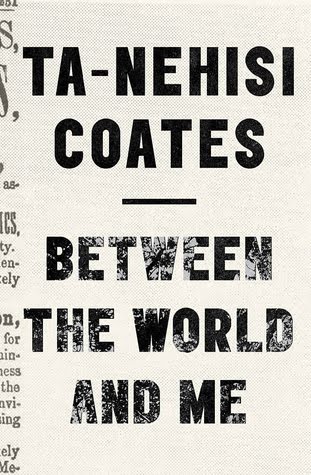 I'm still not sure how I feel about this book. At times, I thought it
was brilliant, a passionate discourse on what it's like to be black in
America in the 21st century-not an easy road. Some of Coates'
observations are revelatory, "Race is the child of racism, not the
father" and some were originally attributed to Baldwin, “people who
think they’re white", which fits in perfectly with what Coates is
saying. Although race is a meaningless construct, when you have an
entire segment of the population whose roots are slavery and oppression
because someone deemed them property based on the color of their skin,
that's not a wound that heals without thick scars. Whether you believe
that there are different races or not, the horror of institutionalized
murder, torture, and rape remains. As a Northerner who "believes she is
white", neither I nor my family have history with slavery (although
there are some abolitionists and Civil War soldiers in the family tree).
I never worry about my 18 year old son being the victim of police
brutality. But for us, the urban culture is as distant as the rise from
slavery; I find my gratitude for our peaceful lives is juxtaposed with
guilt and anxiety for all the mothers out there who MUST worry about
their sons. And, after reading this book, I find myself feeling
defensive: all white culture, it seems, must be cut down to size before
the black culture can move past the fear and anger toward a more equal,
less violent society. After absorbing Mr. Coates' intense rage at the
Dreamers (i.e., the whites), I have no hope of this ever happening. Is
this the point he intended to make?
I'm still not sure how I feel about this book. At times, I thought it
was brilliant, a passionate discourse on what it's like to be black in
America in the 21st century-not an easy road. Some of Coates'
observations are revelatory, "Race is the child of racism, not the
father" and some were originally attributed to Baldwin, “people who
think they’re white", which fits in perfectly with what Coates is
saying. Although race is a meaningless construct, when you have an
entire segment of the population whose roots are slavery and oppression
because someone deemed them property based on the color of their skin,
that's not a wound that heals without thick scars. Whether you believe
that there are different races or not, the horror of institutionalized
murder, torture, and rape remains. As a Northerner who "believes she is
white", neither I nor my family have history with slavery (although
there are some abolitionists and Civil War soldiers in the family tree).
I never worry about my 18 year old son being the victim of police
brutality. But for us, the urban culture is as distant as the rise from
slavery; I find my gratitude for our peaceful lives is juxtaposed with
guilt and anxiety for all the mothers out there who MUST worry about
their sons. And, after reading this book, I find myself feeling
defensive: all white culture, it seems, must be cut down to size before
the black culture can move past the fear and anger toward a more equal,
less violent society. After absorbing Mr. Coates' intense rage at the
Dreamers (i.e., the whites), I have no hope of this ever happening. Is
this the point he intended to make? Although
this is billed as young adult nonfiction (and, indeed, it reads as a
simplified version of the very complex relationship between Vincent and
Theo), I would encourage you not to let that deter you from picking this
up. It's almost as if Deborah Heiligman has boiled their brotherly
interactions down to essentials, in much the same way that Vincent chose
not to paint in a realistic fashion, but by emphasizing color and
perspective to heighten the emotion within a scene or portrait. Vincent
and Theo were united in their struggle to make the world a more
beautiful place, whether through Vincent's artwork or by Theo promoting
him and trying to bring the recognition that he thought was his
brother's due. Interspersed in their journey are vignettes highlighting
Vincent's keen intelligence coupled with mental instability, and Theo's
fierce loyalty that was undercut by grim financial reality and
burgeoning health problems of his own. Much as yellow was used
continually by Vincent (it was his favorite color) to add vitality and
freshness to his paintings, Heiligman again and again comes back to the
selfless love and support that the brothers shared for one another.
After you read this enchanting book, be sure to watch Loving Vincent,
an animated film about the year after Vincent's death in which all
65,000 frames are painted in oils imitative of Van Gogh's style. Two
beautiful odes to two beautiful souls!
Although
this is billed as young adult nonfiction (and, indeed, it reads as a
simplified version of the very complex relationship between Vincent and
Theo), I would encourage you not to let that deter you from picking this
up. It's almost as if Deborah Heiligman has boiled their brotherly
interactions down to essentials, in much the same way that Vincent chose
not to paint in a realistic fashion, but by emphasizing color and
perspective to heighten the emotion within a scene or portrait. Vincent
and Theo were united in their struggle to make the world a more
beautiful place, whether through Vincent's artwork or by Theo promoting
him and trying to bring the recognition that he thought was his
brother's due. Interspersed in their journey are vignettes highlighting
Vincent's keen intelligence coupled with mental instability, and Theo's
fierce loyalty that was undercut by grim financial reality and
burgeoning health problems of his own. Much as yellow was used
continually by Vincent (it was his favorite color) to add vitality and
freshness to his paintings, Heiligman again and again comes back to the
selfless love and support that the brothers shared for one another.
After you read this enchanting book, be sure to watch Loving Vincent,
an animated film about the year after Vincent's death in which all
65,000 frames are painted in oils imitative of Van Gogh's style. Two
beautiful odes to two beautiful souls! Deep Dark Blue by Polo Tate
Polo Tate recounts her journey from idealistic high school athlete to U.S. Air Force Academy recruit, to traumatized assault survivor. Polo had dreamed from a very young age of joining the Air Force, so it's with excitement and anticipation that she heads to the Academy for basic training and to become a member of their elite volleyball team. She's someone who is used to succeeding, both as a student and as an athlete, so when things start to go wrong, she assumes if she works harder, than things will be better. Unfortunately, harassment and abuse escalate to an assault. Compounding the injury, Polo is not believed by her peers, and a very large upperclassman works hard to break her spirit and prevent her from pursuing justice.
This is a great story of resilience and overcoming adversity. Since this is a book aimed at a younger audience, I wish that Polo had emphasized more how important it is to have people who support you, as nobody makes it through something like this on their own. However, this story will certainly resonate with high school girls, particularly athletes.
 You Don't Have to Say You Love Me by Sherman Alexie
For 20-odd years, I have been a big Sherman Alexie fan. His particular formula, combining magical realism and humor with stark truths, produced contemplative, entertaining books. His themes of poverty and familial unrest transcend race (more so than I think he realizes) and I was somewhat undeterred by the current controversy surrounding his treatment of women because I think if we only valued artists with unblemished lives, it would be slim pickings, indeed.
Therefore, I was disappointed to read this book and find that Mr. Alexie, in his grief, comes across as a narcissistic grudge-holder, willing to publicly vilify his family for his own ends. Nobody in the book receives more than a crude outlining of their character or personality -except himself. He's angry at the white race who have destroyed his culture, and the Indian culture, which he seems to only reluctantly consider himself a part of. I understand that being relentlessly bullied must have been difficult. If anything, he might use those emotions to understand some of the feelings that his female accusers have expressed. Here's the saddest part: Sherman Alexie reveals himself to be a very unforgiving person, and in that portrait, shows us the value of being able to reconcile and move past old pains; for that we should thank him.
 The Stranger in the Woods by Michael Finkel
My attraction to this book wasn't limited to the fact that I'm from western Maine and therefore familiar with the area in which Christopher Knight lived in isolation for 27 years. As an introvert (extreme introvert), I was struck by the concept of withdrawing from society. How does one do that? And what might be the tipping point where one progresses from simply being a quiet homebody to walking away from everything and everyone -including creature comforts. Christopher certainly didn't make an easy decision, and while professionals toy with the idea that he might have some sort of mental disorder, perhaps he just wanted to be alone.
It's fascinating to read how Christopher eluded discovery for so long, despite committing 1000 burglaries. More interesting, still, is the conflict he felt knowing that stealing was wrong, but knew he needed supplies in order to survive. A moral man who is also a notorious felon.
Michael Finkel does a fine job of portraying Knight as he is: not a mystic or sage, but someone finding happiness outside the normal spectrum of social behaviors. I get the feeling that Finkel dances very close to that edge himself-a kindred spirit to Knight and also to me.


